Word puzzles without the pressure
Three calm word games in one app: a crossword-style letter wheel, a word list and a word search. We designed it with people living with dementia in mind, and it suits anyone who finds ordinary word games too busy.
- No adverts, no gems and no subscription
- Written and spoken clues are always available
- Steady difficulty tailored by you or a carer
Many word games are full of adverts, pop-ups and things to tap that get in the way. Some charge for every clue, so the game quietly gets harder to finish. We wanted something quieter: a word puzzle where the words are the focus, the controls are simple, and help is always there.
We made CalmWords after seeing a much-loved crossword habit become too hard to enjoy. It is for people living with dementia, for the family and carers who play alongside them, and for anyone who prefers a calmer game. Read our story below.
Choose the game that suits
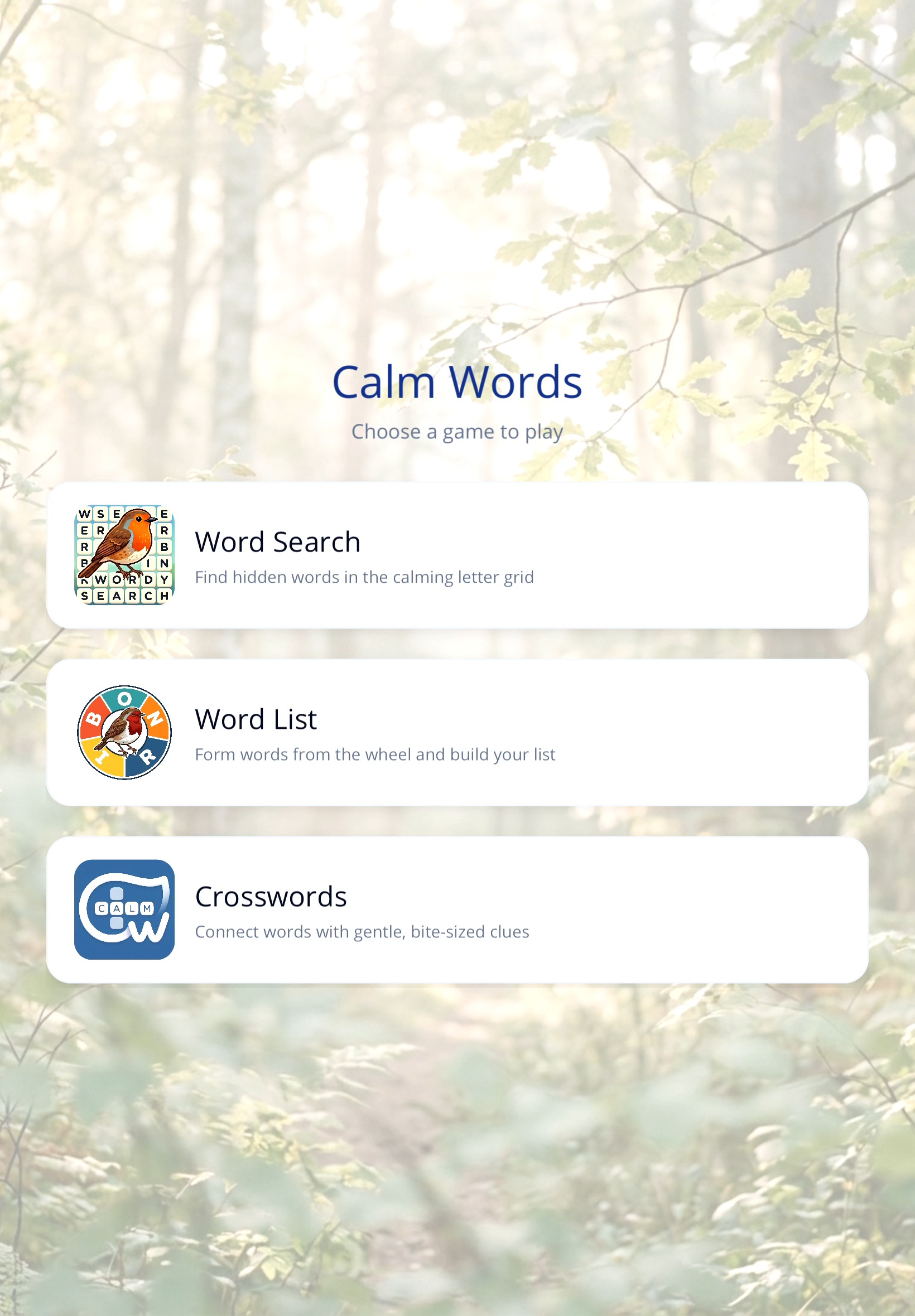
Switch freely between three familiar word puzzles, each set against calm watercolour scenes with clear, high-contrast letters.
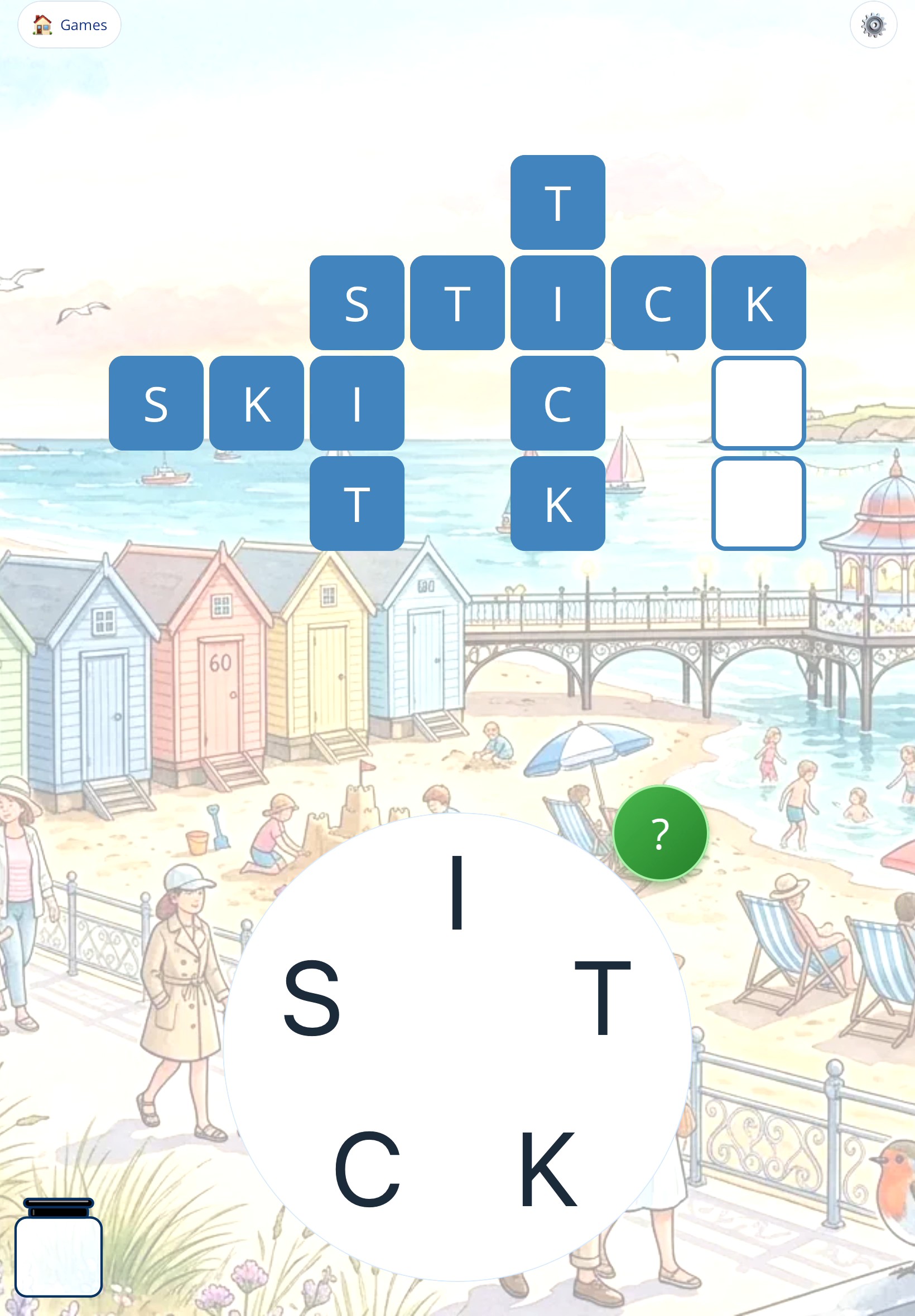
Crossword letter wheel
Swipe between the letters on the wheel to fill in a clear, bite-sized crossword over calming watercolour scenes.
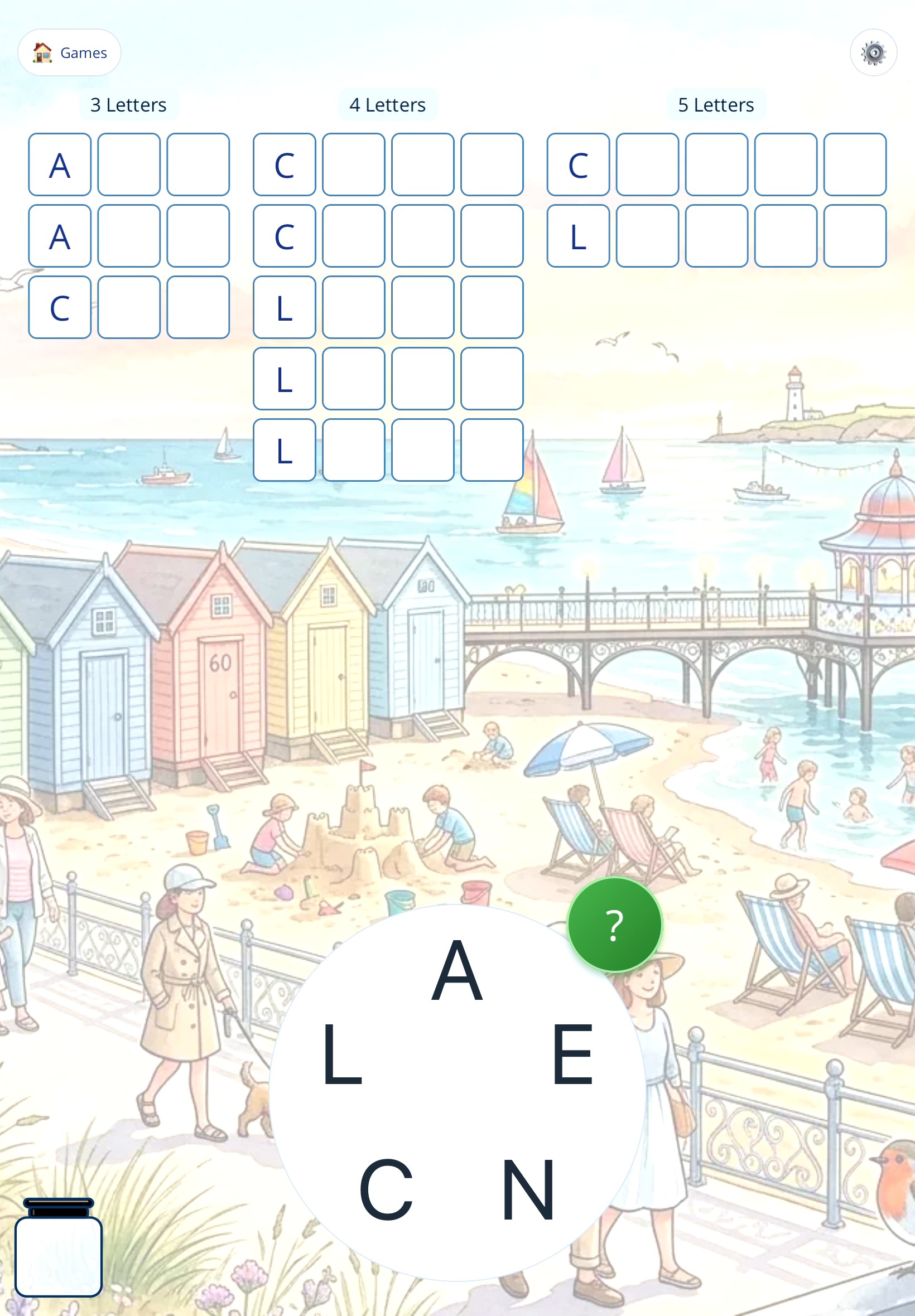
Word list
Build 3-, 4- and 5-letter words from the letter wheel. The first letter of every word is already filled in, so you never face an empty grid.
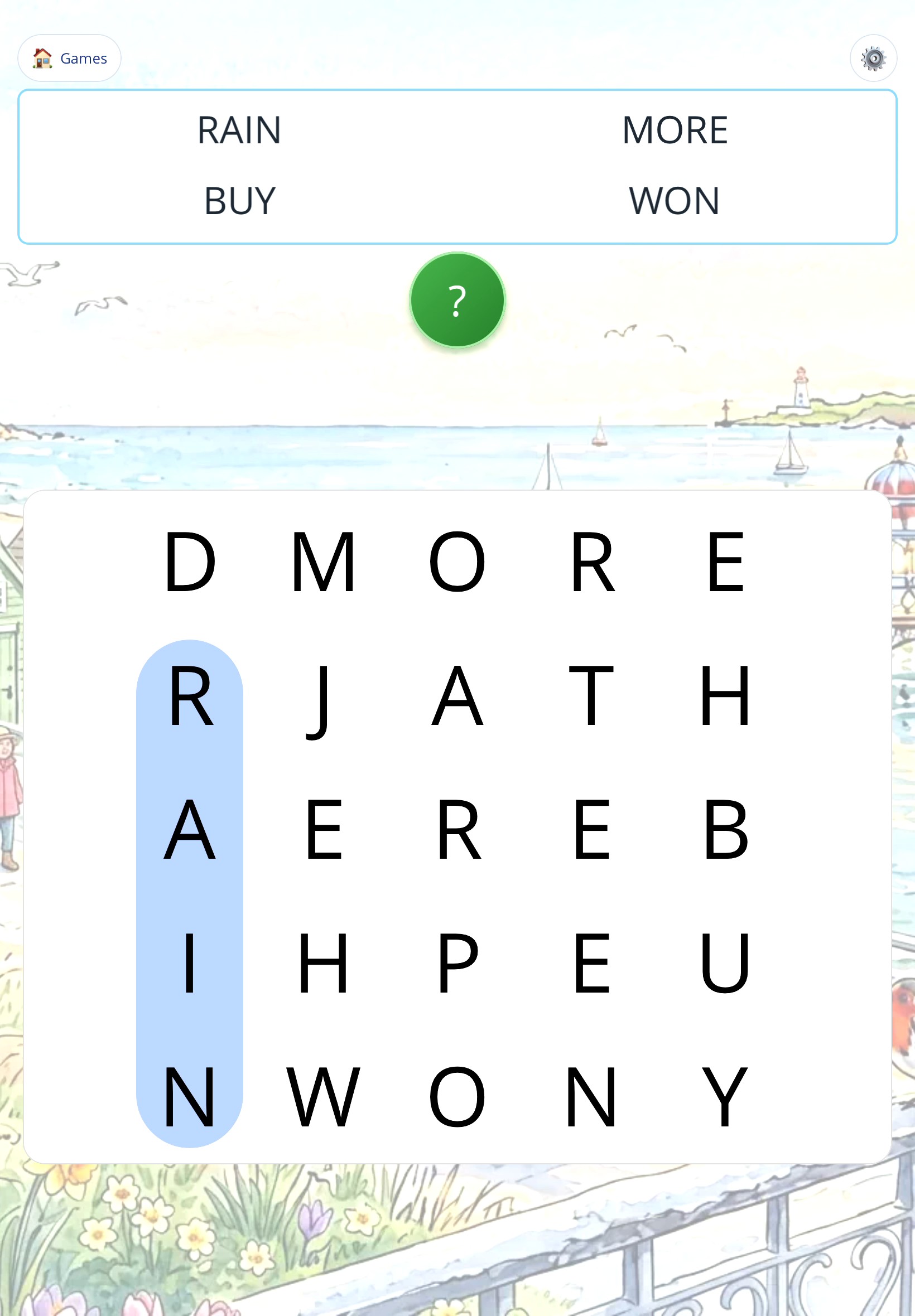
Word search
Find familiar words in an uncluttered letter grid — from a gentle 5×5 grid up to 9×9 — with clear, high-contrast letters.
Why we made CalmWords
By Dr Jane Mortley — how a much-loved weekly crossword habit inspired a calmer kind of word puzzle.
My mother always enjoyed doing crosswords. After picking up the weekly Waitrose (supermarket) paper she would work on the crossword at the back with my father, and would be proud to complete it. Sadly we noticed over time that she was contributing less and less to solving the clues.
I tried various puzzles for her iPad, and settled on the “word-wheel” type of puzzle, where you swipe between letters to fill in the crossword. She was still able to complete them, and they gave her a real sense of success. They also became absolutely invaluable on my phone for those times when we had to wait in a queue, in a doctor’s or dentist’s waiting room for instance.
Over time, however, the problems with these puzzles went from casual annoyances to complete blocks.
These puzzles are often paid for through an internal currency, such as gems. Every clue costs you gems, and when you run out you have to pay real money. The game gradually gets harder as you solve more puzzles, to encourage you to need clues. I tried reinstalling the games, but they would steadfastly remember the last puzzle played and start again at that level.
Many use adverts, which now often look like games themselves, or promotional videos. These were very confusing, with my mother exclaiming that she did not know what was going on. There were also too many bells, whistles and sound effects, which I guess are there to keep younger players happy, but only added irritation and confusion for my mother.
But the core games were useful, and she did enjoy the gameplay in between the adverts. As there was no version of the game designed for people with dementia, I decided to develop my own and “dog-feed” it. (Dog-feeding does not mean eating dog food. It means using something you have created yourself, to find out whether it works.)
My mother loves the new game. There are no ads or videos, no gems are needed, you can have as many clues as you like, and the difficulty levels are consistent.
I’ve found this puzzle invaluable with my mother. I hope you get some value from it too.
Why ordinary word apps became a block
- Internal currencies such as gems charge for every clue.
- Difficulty quietly escalates so players get stuck — even after reinstalling.
- Adverts and promotional videos look like games themselves and cause confusion.
- Noisy bells, whistles and sound effects add irritation rather than calm.
What we did differently in CalmWords
- No adverts, promotional videos, countdown timers or gems.
- Unlimited written and spoken clues on every square.
- Consistent difficulty drawn from ~8,000 familiar words.
- Three calm games in one app: letter wheel, word list and word search.
Designed to keep things calm
We left out what makes many word games hard to use, and added gentle help and controls built for people with dementia and their carers.
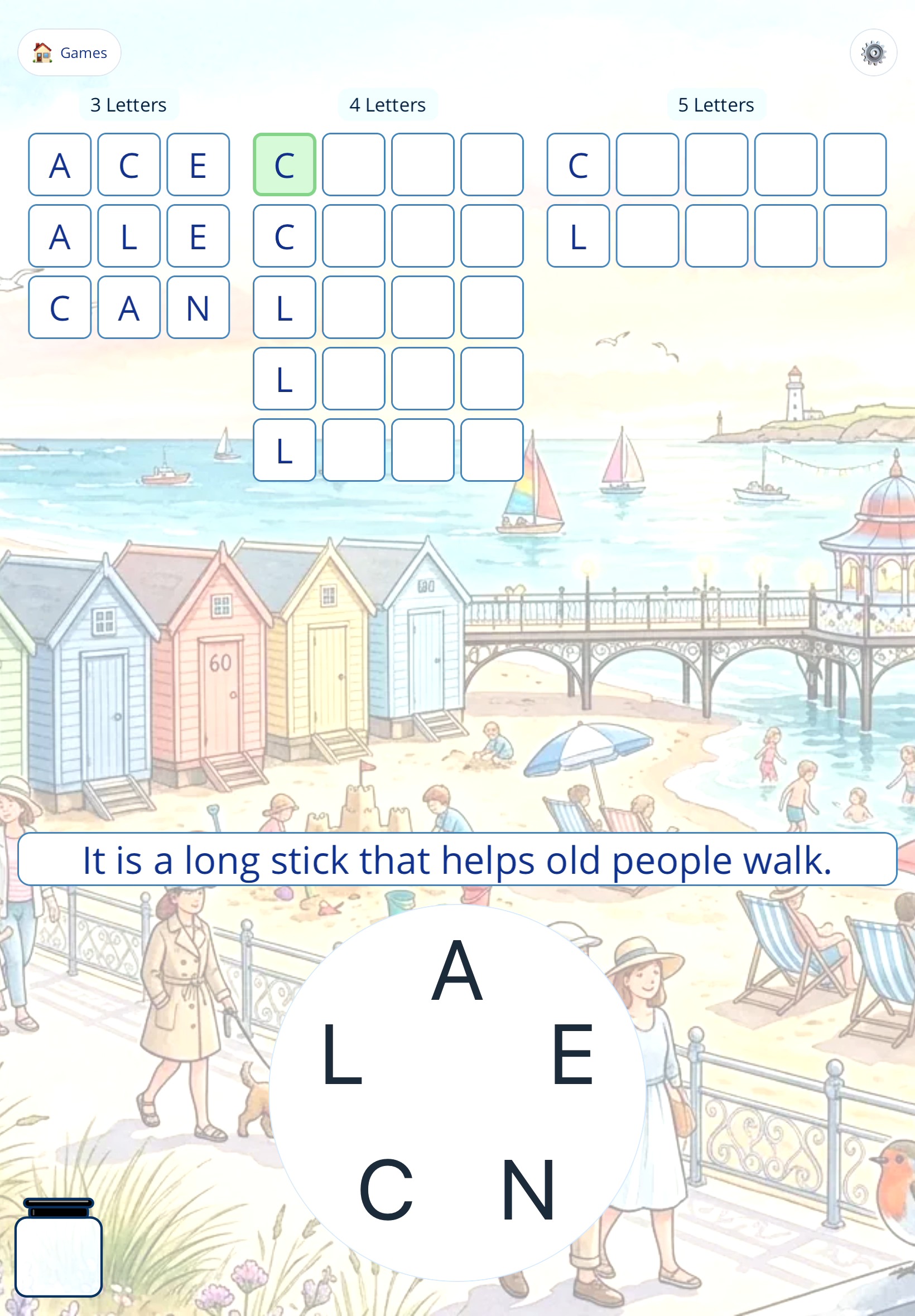
Written and spoken clues on every square
Tap any letter square or the green help button at any time to see a clear written clue and hear it read aloud.
Clues are always available, can be repeated as often as you like, and never cost points or gems — so every puzzle can be finished with a sense of success.
Steady difficulty & carer controls
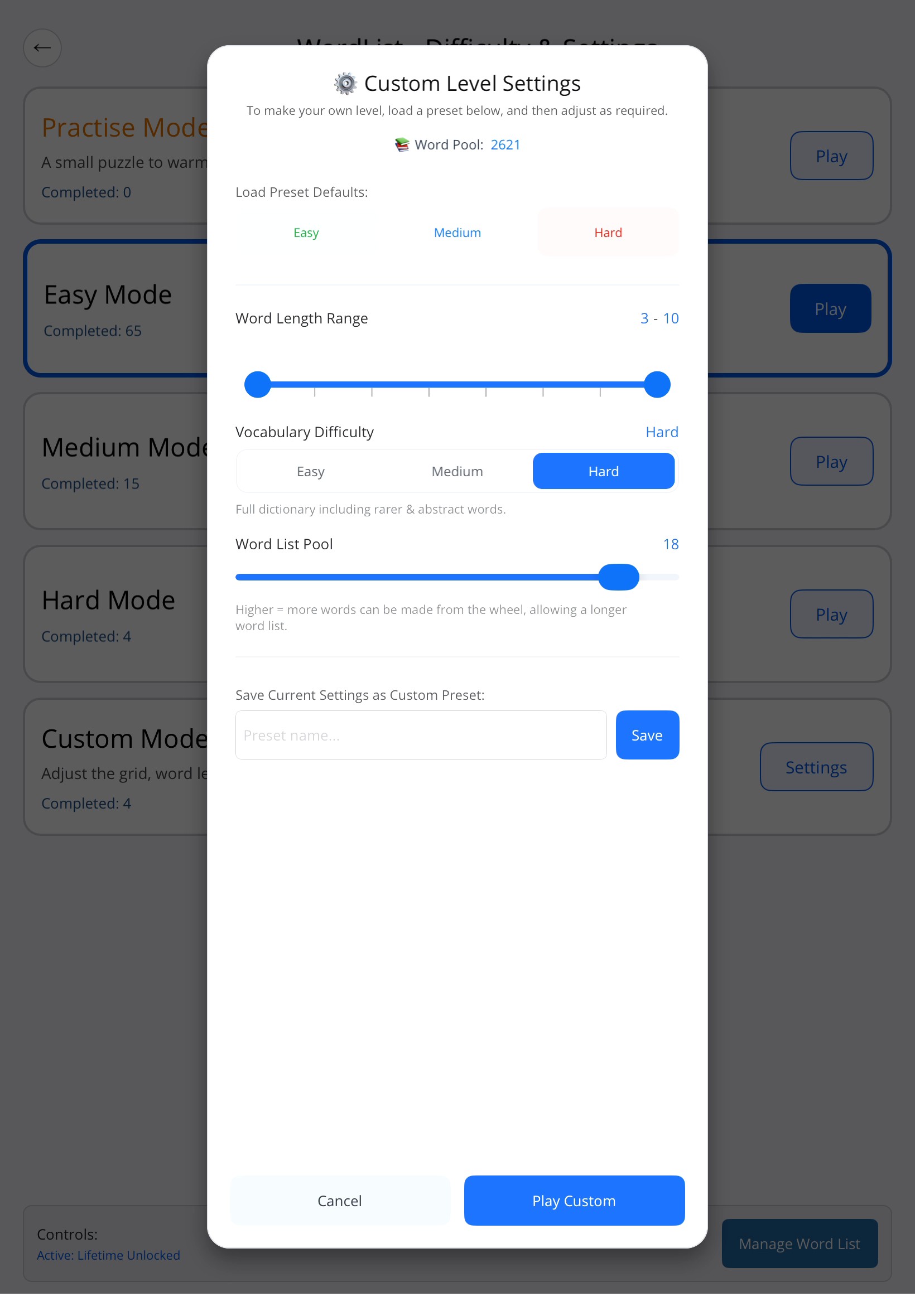
Having trained and worked in speech and language therapy, Dr Jane Mortley drew puzzles from a pool of about 8,000 common words, classified by length, how often they are used, age of acquisition and concreteness.
Unlike mainstream word games, the difficulty stays steady rather than getting harder to push in-app purchases. Choose Practice, Easy, Medium or Hard, adjust the sliders to save a custom preset, or add your own personal words.
Gentle seasonal progression
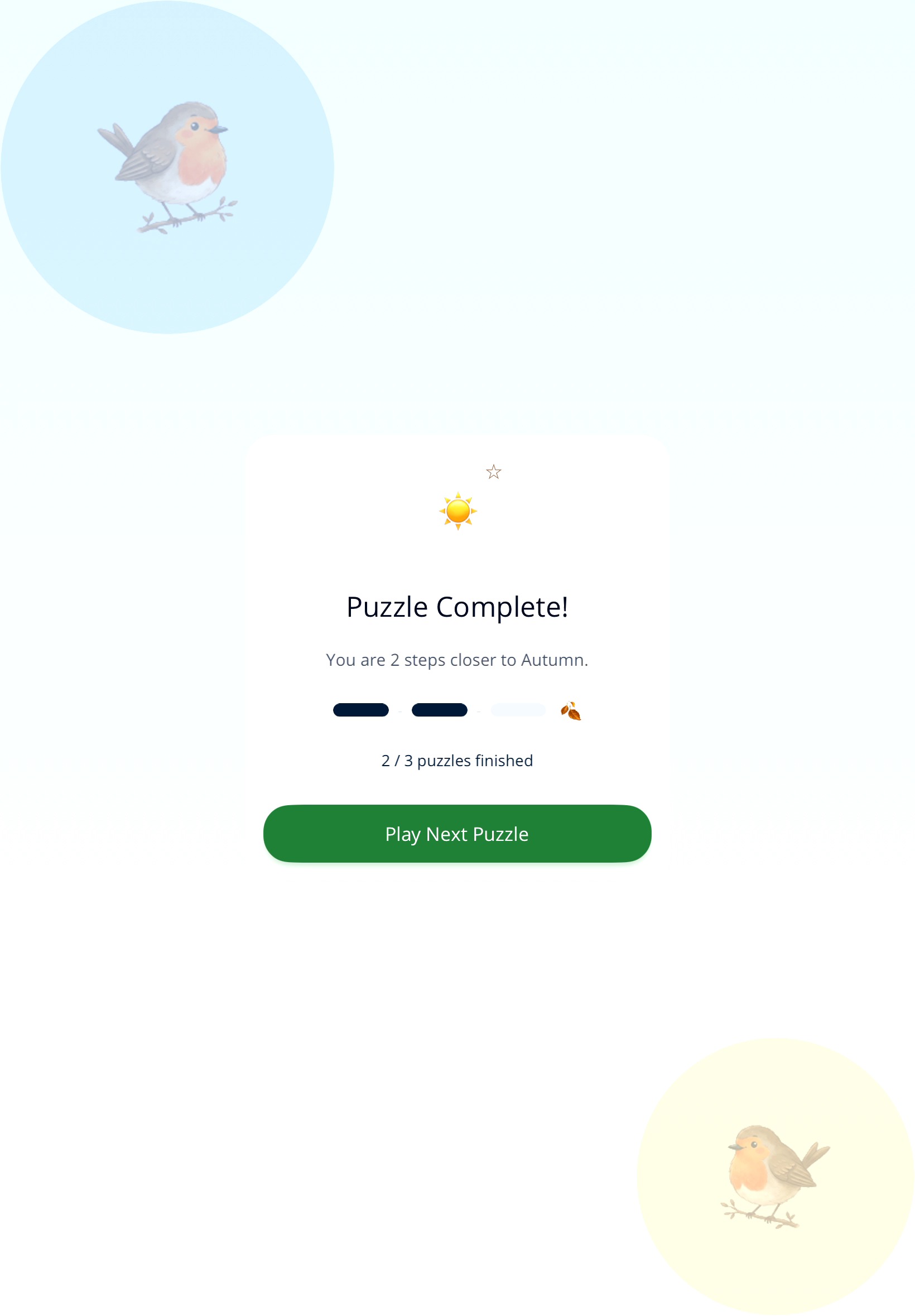
Three puzzles make a season, and four seasons make a year.
Each completed puzzle brings a calm, encouraging celebration and moves gently through watercolour British countryside and seaside scenes — with no noisy flashing pop-ups.
No adverts, gems or videos
Nothing interrupts the game. There are no pop-up adverts that look like games, no countdown timers, and no virtual currency to earn or spend.
Add your own words
Players and family members can add personal words — such as familiar places, hobbies or family names — to make puzzles feel close to home.
Try it free for 7 days
Before buying a game, one of Jane’s concerns for her mother was whether she would actually use it. So you can use the whole app free for 7 days.
After that, you can unlock it once, for about the price of a cup of coffee. It is a one-off cost, with no subscription, and Practice Mode continues to be free after the trial.
CalmWords will be on the Apple App Store. [APP STORE LINK]
Small successes
We think finishing a puzzle, and enjoying it, matters more than a hard challenge. That is why the difficulty is steady and help is built in.
Who we are
Steps is a small, independent company based in the UK. Since 2005 we have made aphasia software, including StepByStep, which was used in the Big CACTUS trial, a randomised controlled trial across 21 NHS speech and language therapy departments. Read about the Big CACTUS trial (opens in a new window).
Our puzzle apps are separate from that research. They are leisure apps, designed to be calm and easy to use. They are not therapy.
Get CalmWords
CalmWords is coming to the Apple App Store. Try it free for 7 days.